
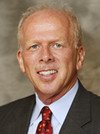
David Myers
Assuming david is required, and myers is required, the following 20 results were found.
-
The Ethnomusicology of Music Learning and Teaching
Ethnomusicology, for at least the last forty years, has been primarily an idiographic discipline. That is, ethnomusicologists' research has focused on the description of particular music systems and music cultures at the expense of either nomothetic...
-
Reconciling Values and Dollars in an Age of Declining Resources
in this time of limited-and limiting-resources, and how will we respond to the questions that come with this new reality? David Myers, the Director of the School of Music at the University of Minnesota, offers thoughts, suggestions, ideas, and...
-
Audiences, leadership and change in the symphony orchestra field. Miami: John S. & James L. Knight Foundation. authors: David Myers author_ids: 204 authors: David Myers author_ids: 204
-
Confronting the Dilemmas of Higher Music Education: Is There a Will to Change?
of artistry of the highest caliber, is unequivocal. We all have much to learn from his experience and wisdom. authors: David Myers author_ids: 204 authors: David Myers author_ids: 204
-
for excellence. Such community-wide commitments may help build a lasting place for music in our schools. authors: David Myers author_ids: 204 authors: David Myers author_ids: 204
-
Music in Higher Education: Evolution Now and Ahead of Us
study the essential program content of the undergraduate music majors. This Task Force on the Undergraduate Music Major (David Myers, chair, Juan Chattah, Lee Higgins, Victoria Levine, Timothy Rice, David Rudge, Ed Sarath, and myself)1 is at work now...
-
Music teacher preparation programs in the United States tend to have at least one thing in common - they stem from a traditional music curriculum where students with various program emphases have a common core of classes and experiences. The thinking...
-
Defending Music Theory in a Multicultural Curriculum
Defending Music Theory in a Multicultural Curriculum1 Music theory has served as the foundation for undergraduate music curricula in the United States for much of the past century. Within many music departments, it has been used to introduce students...
-
Poking the Pillars: A Preliminary Evaluation of Integration, Diversity, and Creativity
we can continue to tell our story of a broader view of the value of music, and of music theory. Notes 1Ed Sarath, David Myers, Juan Chattah, Victoria Lindsay Levine, David Rudge, and Timothy Rice, "Transforming Music Study from its Foundations: A...
-
Making the Music Major Relevant at Liberal Arts Colleges
Music Major for helping to inform and shape my thinking on this topic: Patricia Campbell, Juan Chattah, Lee Higgins, David Myers (chair), Timothy Rice, David Rudge, and Ed Sarath. My own interest in this topic began in 1997, when I convened a session...
-
Preliminaries In the 1990s, college music is undergoing radical curriculum reform in response to various calls to diversify subject matter and repertoire. Traditional programs of study are being challenged, and classical canons of repertoire broken...
-
Music Matters: Curricular Change During Times of Institutional Stress
The curriculum overhaul described in this essay was the result of a practical and intellectual collaboration with three departmental colleagues, whom I acknowledge with gratitude: Robert Cowles, Charity Lofthouse, and Mark Olivieri. Editor, Scholarship...
-
Help Wanted? Exploring Altruism in a Music Conservatory through Positive Social Deviance
The purpose of this project was to explore student reactions to altruism in the affective context of a music conservatory. Through a series of scenarios designed to breach social norms, the author gauged conservatory students’ willingness to accept...
-
Overview and Content of the Manifesto
in the undergraduate music major curriculum." Members of the task force included a range of disciplinary representation: David Myers, Music Education (TFUMM Chair) Ed Sarath, Jazz and Contemporary Improvisation (Lead Author) Juan Chattah, Music Theory...
-
College-Community Partnerships: The Engaged Campus
Committee members Sang-Hie Lee (University of South Florida) and Beverly Soll (University of Wisconsin-Eau Claire), and David Myers, Director of the Center for Educational Partnerships in Music at the School of Music of Georgia State University. The...
-
Teaching Introductory Music Courses with a "More Comprehensive Perspective"
Any college teacher who teaches an introductory music course to general students—the kind of course that has long been called "music appreciation"—can benefit from reading the 1989 CMS Report Number 7: Music in the Undergraduate Curriculum: A...
-
“What If? and “Why Not?”: A Reintroduction to CMS Forum
on our website) as we ponder the “What if? and “Why not?” of music in higher education. References Campbell, Patricia S., David Myers, and Ed Sarath. 2014. Transforming Music Study from Its Foundations: A Manifesto for Progressive Change in the...
-
An Earful of Africa: Insights from Tanzania on Music and Music Learning
A continuing Eurocentric agenda seems to encircle the educational content and method of music programs in higher education, despite occasional calls, as in the CMS Manifesto (Sarath, Myers, and Campbell, 2017), for diversifying content (and more...
-
In the last issue of the Newsletter, CMS President Cynthia Taggart outlined efforts underway to make the organization of the Society more transparent. One of the four primary areas of activity in this reorganization is career development, and one of...
-
The Manifesto in Motion: Change Comes to Undergraduate Music Studies
time. Redefining Music Studies in an Age of Change: Creativity, Diversity and Integration, co-authored by Ed Sarath, David Myers, and myself (2017), conveniently contains the Manifesto while also working through the backdrop of its development,...


 Copyright © The College Music Society. All Rights Reserved.