
Abstract
In this article, the authors put forward a Conceptual Model of Independent Studio Production (ISP) in undergraduate music technology courses. Independent Studio Production reflects the increasingly multifaceted nature of the recording industry, where artists frequently occupy multiple roles in the creative process, including producer, audio engineer, promoter, and distributor. Studio recording happens in various places, including bedrooms, full-scale professional facilities, on tour, and entirely through the Internet. Therefore, designing assessments that carefully measure technical, theoretical, and creative skills that independent musicians encounter in myriad spaces may yield a more flexible approach to teaching music production. Though studio pedagogy has a rich tradition in music technology and audio engineering courses, many high-end recording studios have closed or been forced to change their business models in recent years. Additionally, while students frequently have access to high-end facilities during their studies, they often record at home and collaborate online. The ISP Conceptual Model encourages iterative curricular development through Authentic Assessment. After a brief synopsis of Authentic Assessment, we discuss AA implementation into three undergraduate music technology courses. The article concludes with suggestions on ways educators might integrate the ISP Conceptual Model through backward design.
Introduction
We discuss a new conceptual model of music technology pedagogy that reflects the accelerated pace where tools for composing, recording, and distributing music are affordable and accessible for independent artists working remotely. Once confined to expensive recording studios with sophisticated equipment that required specialized knowledge, the rise of high-quality “prosumer” audio interfaces, microphones, MIDI controllers, and Digital Audio Workstations (DAWs) allow musicians to create and distribute content for a fraction of the cost. Moreover, while there is considerable research interest in various aspects of music technology pedagogy and education (Clauhs, Franco, and Cremata 2019, 55; Dorfman 2022, ch. 1; Partti, Weber, and Rolle 2021, 124-125), audio engineering pedagogy and teaching and learning in music production (Carugo, 2021, 1; Kladder 2022; Walzer 2020, n.p.), scholarship on what we term Independent Studio Production (ISP) has received less coverage in the literature.
Independent Studio Production describes a process of content creators using the tools and space available to produce recorded music. Artists in these realms occupy multiple roles, once commonly occupied by multiple individuals in traditional recording studios. Such roles include the audio engineer, studio musician, producer, promoter, and distributor. Scholars often refer to this person as a “bedroom producer,” which describes recording studio practice in the privacy of one’s home (Barna, Stahl, and Percival 2022, 191; D’Errico 2022, ch. 1; Walzer 2021, 1-5). Terms like “semi-pro” and “independent”create tension against what Keith et al. (2022, 317) see as a perpetuation of neoliberalist ideology by audio manufacturers to use terms like “industry standard” and “professional.”
Independent Studio Production builds on what Boehm et al. (2018, 255-256) describe as a new generation of music technology practitioners focused on creativity where the word “technologist” is replaced with “Producer,”—further reinforcing the transition to a more fragmented process undertaken by the musician. The COVID-19 pandemic and its aftermath further cemented many of the workflows made popular in ISP, including a reliance on Do-It-Yourself and makeshift setups that use the principles of professional design, which have become widely accessible, but generally do not involve commercial installation. Independent Studio Production does not only refer to an individual, single-person creation process. Independent Studio Production pedagogy still recommends collaborative interaction between multiple creators. However, there is a recognition that the historic compartmentalization of studio pedagogy responsibilities has receded mainly in the workflows of many music creators. Recent studies on educators using Internet and Communications Technology (ICT) to facilitate music-making revealed a plethora of innovative pedagogies designed to help students record and produce music from a distance (Beirnes and Randles, 2023, 69; Joseph and Lennox 2021, n.p.; Merrick and Joseph 2023, n.p.). Moreover, as the music industry remains in flux, the timing is right to consider what tools and techniques educators may use to mentor students whose primary workflows and income generation are equally unpredictable (Howard et al. 2021, n.p).
Throughout the paper, we explore three primary areas to generate a working theory of ISP and its application for mentoring artists outside established networks in the music industry. The discussion focuses on our work in undergraduate university settings; however, the framework is meant to be adaptable for all educators in music technology settings. First, we provide a concise review and synthesis of recent music technology and audio education scholarship to better understand the concept of studio pedagogy. A studio implies any place where independent musicians use technology for creative purposes, including songwriting, beat-making, recording, composing, and online performances, partly due to improved digital and remote capabilities (Pras, Guastavino, and Lavoie 2013, 612-614; Watson 2013, n.p.). A critical distinction between traditional recording studios and smaller project studios is in the creative decision-making process. Producers often make creative decisions regarding studio musicians, song selection, arrangements, and key personnel (Burgess 2014, ch. 1). More recently, scholars have analyzed the complex dynamics in creative decision-making in popular music production, noting that the process is increasingly fluid and unpredictable and that the site where music is recorded influences the creative direction of the music and the interpersonal relationships among the artist and their collaborators (Gander 2015, n.p.).
Second, we elaborate on ISP by identifying music production’s fluid and transient nature by those without access to specialized facilities and resources designed for recording, performing, and distributing content. While there are many commonalities with producing music at home versus in a high-end studio, the evolving needs of the independent artist dictate that music technology educators adopt a flexible, autodidactic model of teaching designed to encourage experimentation, curiosity, and lifelong learning. Third, we establish a conceptual framework for ISP and its broader application in music technology education. Here, we center on Authentic Assessment (AA) and its role in creating inclusive, student-centered learning environments that encourage learners to tackle real-world problems associated with independent music production. The article concludes with pedagogical implications for educators.
Incongruence in Recording Sites
Théberge (2004, 760-761) analyzed the recording studio’s historical evolution and noted that technology improvements, coupled with internet access, placed the home studio in a broader network of creative artists, producers, and musicians. Building on decades of improvements to recording technology, the DAW and online collaboration provide independent artists access to a broader range of creative opportunities. Spilker (2012, p. 1) builds on Théberge’s (2004) network studio concept, noting that home studios do not necessarily bypass traditional modes of production and distribution but rather serve as a launching pad for multiple types of creativity. These trends echo distribution shifts in the music industry described by Wikström (2012) as a context model.
[Markets] create services and features that provide a ‘context’ to the songs that users can access. That context may for instance enable music listeners to search and easily find the song they are looking for at a particular time, to share their music experiences with their friends, [and] to organize their favourite music experiences in convenient ways, etc. Such context-based services provide a less deterministic and far more expansive space for innovation that are based on a pure access model (Wikström 2012, p. 11).
Suppose one applies Wikström’s (2012) context-based service model in the broader music technology sector. In that case, home studios similarly function as part of a smaller, hybridized ecosystem rather than the one solely dedicated to professional recording in the entertainment industry. In essence, home studios have always occupied a place in the music and entertainment industries, and scholars have noted that their influence has steadily influenced trends in recording practice (Homer 2009, 85); this is especially notable because large-scale recording facilities have closed or been forced to change their business models (Goold and Graham 2019, 119). From a pedagogical perspective, educators can use the fluid conception of a studio to encourage students to be more creative, less pressured by time constraints, and free to experiment and document their recording process throughout a project cycle while teaching fundamental audio concepts.
Facilities in University Music Technology Programs.
Music technology programs often outfit their facilities with professional-grade recording studios, instruments, software packages, and bespoke performance spaces with multi-channel speakers. The idea may be that these facilities could mirror those found in the music and recording industry, and training students on the same tools they will encounter in the real world better prepares them for entry-level careers after graduation. By outfitting studios with “industry-standard” equipment, the theory is that students will learn on the equipment that professionals use daily in optimized spaces designed for critical listening and creative practice (Sarisky 2008, 1-4). The issue, however, is that production workflows are increasingly transient, and university audio programs cannot always predict the need and pace of technology upgrades (Bielmeier 2020a, 1; Lankford 2021, 5).
Furthermore, equipping facilities with high-end analog equipment (ex: consoles, hardware, tape machines, synthesizers) might serve as a recruiting tool, enticing young students to apply for placement in such degrees on the promise that they will get access to these items during their studies. All of this is good, but it tends to overlook the realities of the independent musician—a person frequently working at home, on the road, and with a much smaller budget as commercially designed studios close (Carugo 2021, 1). A more common scenario would be for the independent musician to record and mix on a laptop in spaces using entry-level monitors or headphones and with minimal acoustic treatment.
One cannot typecast the “independent” musician too much without acknowledging that many artists use high-end facilities if their budgets and networks allow. The issue is that this approach to pedagogy primarily concentrates on the activities typically reserved for those with access to high-end facilities and the technical knowledge required to operate the equipment (Olivier and Pras 2023, n.p.; Thompson and Lashua 2016, 71-74). When teaching multi-track production with an expensive, large-format analog console as the centerpiece, educators must also account for the independent artist’s digital or hybrid workflows to produce an album entirely with software or “in the box,” and prosumer-grade equipment (Cole 2011, 447).
Reflecting on Music Technology Pedagogy
There is a high demand for skilled music technology professionals, and students must build a broad range of knowledge and applied skills. Furthermore, the music technology industry continues to advance, as evidenced by the increased presence of artificial intelligence and machine learning in music production (Miranda 2021; Moffat and Sandler 2019, 125; Sterne and Razlogova 2019, n.p.). A particular challenge for educators is balancing established pedagogies (ex: teaching gain staging, and signal flow, editing audio in a DAW) while keeping pace with technological developments in the music and recording industries. Moreover, students face similar pressures to find jobs after graduation, often navigating many factors to generate sustainable income over the long term (Bartleet et al. 2019, 282). While pursuing a career in the music industry is enticing, many young artists lack the resources to study music technology or are disconnected from curricular offerings (Rescsanszky 2017, n.p.; Winterson and Russ 2009, 340-341). Studies have shown that effective teaching and learning in music technology is student centered, blends academic and vocational coursework, and targets real-world competencies required by industry (Leung 2004, n.p; Rolandson 2020, 105-108; Tough 2012, n.p.).
Another pedagogical conundrum educators seem to face is integrating a hands-on component (ex: using an analog console or synthesizer, building cables, running live sound) into lecture-based classes. This is particularly evident in music conservatories, where integrating music technology into existing courses has been slower, often facing resistance from those trained in other fields (Gaines 2018, n.p.). In a field like music technology, a musician must use (and sometimes build) the equipment to transition from theory to practical application (Flood 2016, n.p.; McNally, Seay and Thompson 2019, ch. 8; Walzer 2017, 143). A more hands-on approach to music technology education could incorporate more group projects, internships, and immersive field trips (in person and virtually), exposing students to new cultural and creative practices and improving motivation (Bartolome 2010, 29; Chen 2020, 147).
Learning Domains in Music Technology Pedagogy
Gagné (1972) analyzed learning processes across multiple domains, including “motor skills, verbal information, intellectual skills, cognitive strategies [and] attitudes” (p. 1). Reid and Petocz (2004) apply this concept to creativity, noting that there are equal parts, “product and process” (p. 45). Educators must use appropriate assessment methods and cultivate an environment where students critically engage with the material and collaborate (Reid and Petocz 2004, 45-46). We can apply the same ideas in music technology pedagogy. For example, by including a broader conception of studio production in existing curricula, students will learn how to operate equipment and communicate with their peers. By its nature, music technology engages multiple learning domains, summarized below:
- Technical skills: Students will learn how to use the latest software and hardware in music production, including digital audio workstations, synthesizers, and samplers (Brown 2014, ch. 1)
- Creativity: Students will be encouraged to experiment with different sounds and techniques and to develop their unique style (Burnard 2007, 37; Crow 2006, 121; Schiavo, Biasutti, and Philippe 2021, n.p.)
- Critical thinking: Students will learn to analyze and evaluate music and develop creative ideas (Dell’Erba 2019, n.p.; Pierard and Lines 2022, n.p).
- Problem-solving: Students will learn how to troubleshoot problems and find creative solutions (Klein and Lewandowski-Cox 2019, n.p.).
- Collaboration: Students will learn to work effectively with others and communicate their ideas (Ben-Tal and Salazar 2014, 79; Davis and Parkers 2013, 4-5).
By nurturing higher order thinking skills, encouraging interdisciplinary exploration, and fostering a lifelong desire for learning, education empowers individuals to adapt to an ever-changing world (Vasil 2019, 298). A well-rounded musical education beyond rote memorization and embracing diverse perspectives prepares students to navigate complex challenges (Williams 2011, n.p.). Higher-order thinking skills include critical thinking, problem-solving, and creativity. They are essential for success in any field of work. Interdisciplinary exploration helps students to see the connections between different subjects and to develop a more holistic understanding of the world (Gretter and Yadav 2016). Students can adapt to new challenges and opportunities by learning how to learn. A well-rounded education focusing on these transferable skills will help students succeed in their chosen career path.
Authentic Assessment in Music Technology Pedagogy
Authentic Assessment (AA) is a curricular model emphasizing the real-world application of knowledge through projects that require students to solve problems, think critically, and actively engage with course materials through collaboration and creativity. Wiggins (1990, 1-3) defines AA as “directly [examining] student performance on worthy intellectual tasks” (p. 1). Like other aspects of diagnostic and formative assessment, AA can be embedded as a feedback mechanism, used to diagnose and troubleshoot issues, identify gaps in knowledge, and promote student agency and autonomy through real-world simulation (Villarroel et al. 2018, 842). A central goal of AA is for students to integrate skills and knowledge holistically; both items are crucial for gauging how students learn across multiple domains and giving teachers flexibility (Darling-Hammond and Snyder 2000, n.p.; Tammaro and Solco 2013, n.p.).
Authentic Assessment research has received less coverage in the music technology literature. Scholars have explored AA with music composition (Deutsch 2016, 53; Moir and Medbøe 2015, 147-149), phenomenology in music technology coursework (Macedo 2013, 208-209), research and applied skills in audio engineering education (Bielmeier 2020b, 243; Lefford and Berg 2013, n.p.), and systematic literature reviews on assessment and creativity in music education (Denis 2018, 20; Webster 2016, 26-32). Music technology programs are still relatively young in academia and vary significantly in their curricular emphasis (Leonard 2020, 1-4). King (2012, ch. 10) notes that exclusive training for many formerly dedicated roles, such as tape operator, recording engineer, and mastering engineer, may not be sensible in today’s cross-disciplinary workflows. The instructional methods of ISP also lend themselves to a more collaborative, flipped classroom (Doi 2016, n.p.; Grant 2013, 3) in which constructivist principles are used (Bostock, 1998, 225).
Constructivism is a philosophy of education that focuses on the learner creating knowledge through their own experiences and has received increased calls to action within music education (Scott 2011, 191; Shively 2015, 128). Building on the work of John Dewey (2015, [1938]), Jean Piaget (1972) and Lev Vygotsky (1978), educators have begun to focus on more holistic student-centric activities that recognize the value that the learner brings to the creation of knowledge through their creative activities (Bielmeier 2018; Clauhs et al. 2019; Kardos 2018, 2-4; McNally and Pras 2021, 4). This philosophy also emphasizes the need to examine the tools of instruction to confirm that they are providing students with active learning environments that support the development of intended concepts and skills. An authentic assessment provides a framework for examining the learner’s process and an opportunity for reflective practices for the instructor.
Building a Conceptual Model of ISP
Scholars note some ambiguity between the terms Theoretical and Conceptual Framework (Kivunja 2018, 44-45; Tamene 2016, 50; Varpio et al. 2020, n.p.). While the terms are often used arbitrarily in connecting theory, data collection, and literature review, an inductive method often generates a broader set of themes suitable for creating a model (Imenda 2014, 185). We propose a five-point Conceptual Model of Independent Studio Production based on principles from Authentic Assessment and Constructivism. As there is little extant research on conceptual models in studio production in music technology, we aim to provide a broad set of learning objectives for educators to consider when designing projects, modules, and course content.
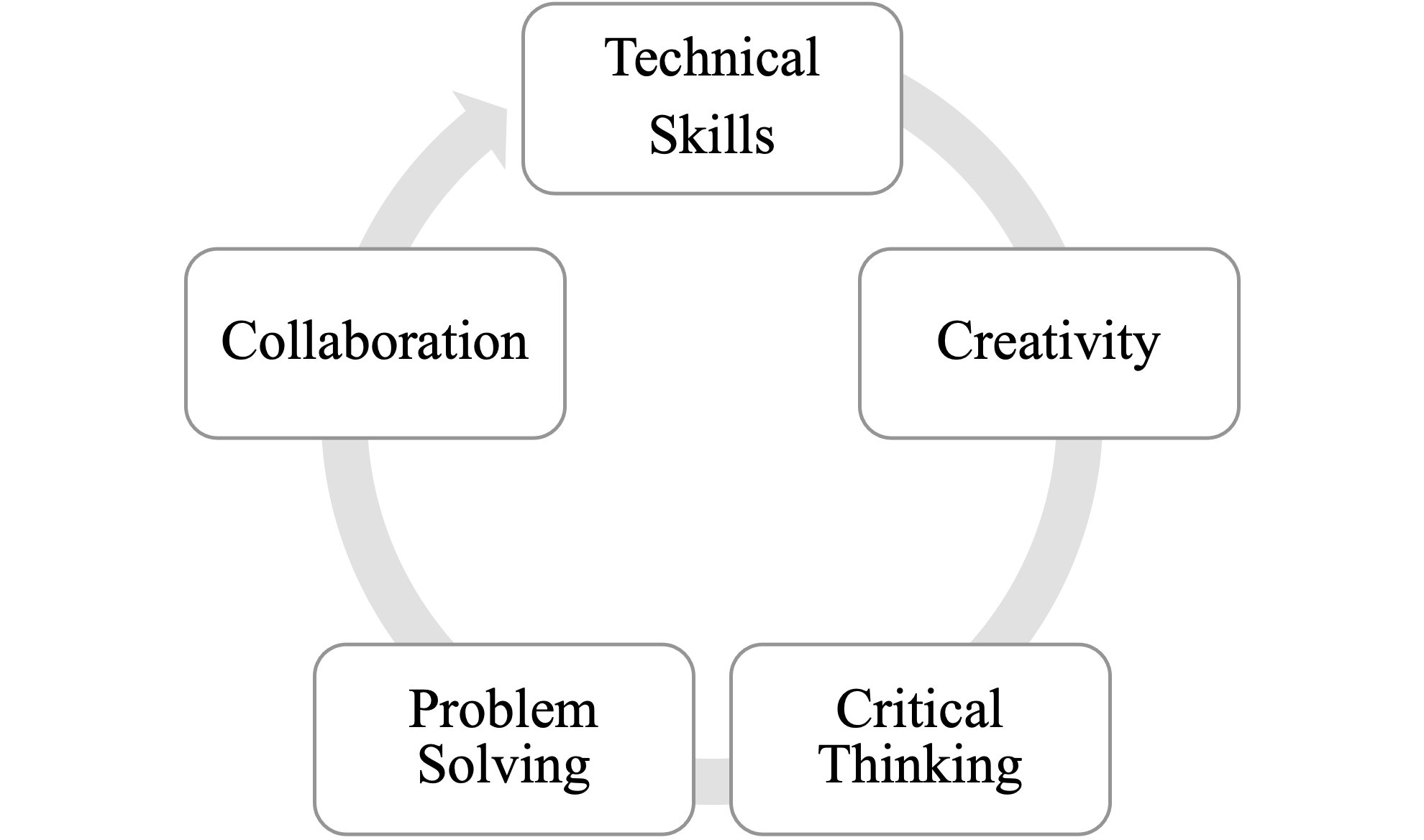
Image 1: Learning Domains in Independent Studio Production
The first image describes a cyclical process suitable for independent artists to undertake in their creative practice. Recording at home (as one example) requires the musician to operate equipment, troubleshoot issues, think about musical arrangements, and potentially collaborate with others. Additionally, the learning domains describe processes found in music production and distribution. The artist must synthesize various concepts, build confidence with digital tools and make decisions based on their insights and creativity. The model aims to generate a flexible approach that educators can use to teach fundamental concepts on music technology while also considering holistic assessment ideas that engage learners to “think outside of the box” when producing music. Indeed, as Wikström’s (2012, 11) context-based model demonstrates, the success of a creative endeavor cannot be limited to one rubric (ex: album sales). Instead, the experience of creating, curating, decision-making, and producing culminates in a broader set of outcomes and access points for the independent artist.
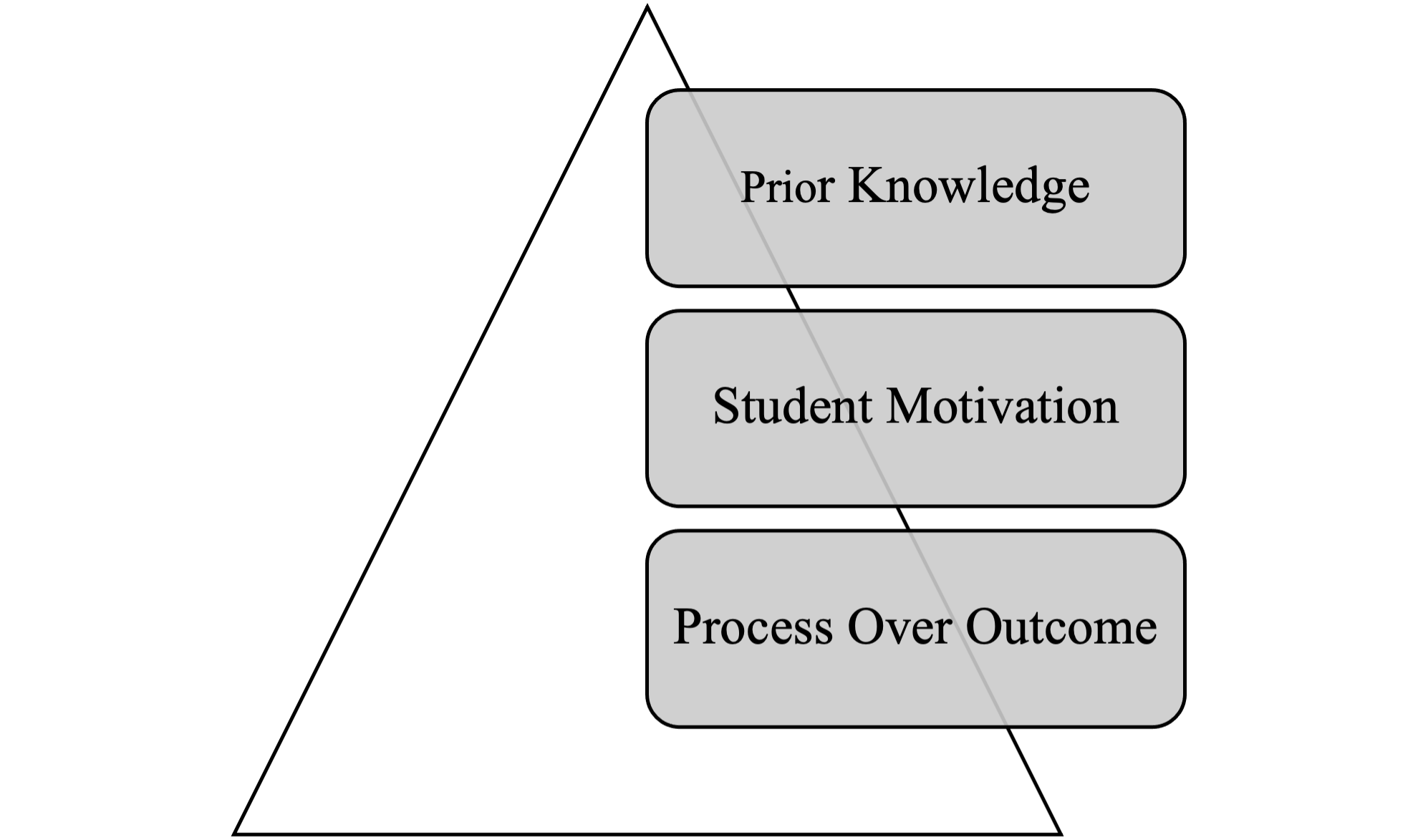
Image 2: Components of Authentic Assessment
In the second image, the three areas informing AA include the learner’s knowledge base, motivation, and focus on the process rather than a fixed result. Darling-Hammond and Snyder (2000, n.p.) argue that the practical application of multiple types of acquired knowledge is essential when designing assessment rubrics and is more meaningful when evaluated by experts in a real-world scenario. Moreover, AA has been shown to improve student motivation and efficacy through peer feedback, classroom observations, and checklists (Mintah 2003, 161). Equally prescient is the role of the instructor in facilitating a collaborative environment where students demonstrate their knowledge through creative work, experiments, portfolios, and teacher observation (Callison 1998, 42).
Incorporating Authentic Assessment in Music Technology Coursework
In music technology courses, AA might include collaborating with an independent artist to produce an album of songs where each student takes on various tasks in the music production process, including recording, mixing, album design, internet distribution, and booking shows to promote the new release. The instructor and their students might start by identifying and categorizing the recording workflow. Examples include pre-production, basic tracking, overdubbing, mixing, and mastering the album. Another possibility includes the “business” side of music production. Here, students might tackle administrative tasks, including booking studio time, managing budgets, registering copyrights, updating websites, and coordinating with other team members (ex: producers, mixers, session musicians, copyists/arrangers, management, and label support).
A limitation of this scenario is that it is modeled after specific jobs in the recording industry; independent artists often tackle these tasks simultaneously and with little formal training. A songwriter may record and arrange music, mix the album, release it online, and book a solo tour promoting the work without a label or proper management. Nonetheless, there is some upside in encouraging students to explore such roles as they may find a niche that piques their interests and talents. Music technology is broad, drawing on multiple STEM disciplines, including computer science, digital signal processing, multimedia performance, and machine learning. Depending on student progress, instructors may find adapting AA in smaller chunks beneficial, starting with one project or assignment and slightly adjusting syllabi over time.
Exposing students to multiple roles in a creative project will assist them in handling the often-overlapping roles that occur when recording music. Though a music producer and audio engineer may have distinct responsibilities, their roles frequently overlap and become more generalized, as each job requires critical listening and communication skills (Deacon, Healey, and Barthet 2022, 1; Kling 2014, 1-3; Neuenfeldt 2007, n.p.). In this case, the artist may assume each role while releasing and distributing the finished product.
Studio recording happens in various places, including bedrooms, full-scale professional facilities, on tour, and entirely through the Internet. Therefore, designing assessments that carefully measure technical, theoretical, and creative skills makes sense. Building ISP assessments varies based on the course requirements, student population, and accreditation standards. One way to build assessments is through backward design. Wiggins and McTighe (2005, ch. 1) explain that backward design is essential to curricular mapping. Here, the instructor considers what students should know at the end of a process (ex: course, specific unit) and designs projects that mirror real-world scenarios and demonstrate various kinds of acquired knowledge. Whitehouse (2014, 99-101) notes that effective backward design considers the transferability of skills and knowledge to multiple domains and engages student motivation. In so doing, the instructor builds assignments and projects around the knowledge and skills students should have after completing the unit or course.
Authentic assessments need not be prescriptive. On the contrary, educators may include fundamental concepts such as signal flow, microphone placement, session layout, and critical listening in their courses. Accordingly, the educator may blend AA with formative and summative assessments in a music technology course. Our work with undergraduate learners has shown us that there is still a place for “tried and true” methods of teaching and learning in the classroom and online.
Pedagogical Examples
Since 2022, we have incorporated the ISP model into three undergraduate courses. We concentrated on modules requiring varying levels of recording proficiency, both individually and in group projects. First-year students enrolled in a technology fundamentals course had to collaborate on an original composition and voiceover project. In each instance, the students worked remotely, sharing files back and forth and using class time for breakout sessions and peer feedback. Initially, the instructor provided more lectures and theoretical foundation, then stepped back, allowing the students to control their work and guided them as needed. Both projects gave students hands-on experience to explore fundamental audio concepts like compression and editing, while keeping the focus on creative expression using cost-effective tools including a MIDI keyboard, headphones, and dynamic microphone. Students learned how to work independently, exchange ideas and media asynchronously, and fulfill musical and technical roles to meet deadlines.
We also implemented the ISP model into an introductory course on recording techniques in a small multi-purpose studio and critical listening space. Like the fundamentals course, the recording class had two parallel projects: a group recording/mixing project primarily in class and an individual recording/mixing project mostly outside class. In the group project, the students suggested popular songs to be covered by the group and then engaged in pre-production, drum, bass, guitar, piano, auxiliary instruments, and vocal recording. Students rotated traditional studio roles at each session, including producer, A1 Engineer, A2 Engineer, Tape Operator, Musician, and auxiliary personnel. This allowed each student to experience the roles throughout the semester. The last few classes were dedicated to live mixing practices, where the students followed along on their laptops but had the autonomy to deliver the final mix and master the group’s song.
Parallel to this, the students began working on their versions of the project, where they would serve in a role emphasizing independent studio production. Each student selected their song to cover and then needed to record and mix at least three instrumental audio sources, one vocal, and one virtual instrument into a mastered stereo file. Students were given extra credit for playing instruments on each other’s projects, but they were required to be the leading creative force in their project, comprising a dual role of producer and engineer. At the end of the semester, the class gathered to listen to all the masters (group and individual projects) and share constructive feedback and encouragement.
Finally, we incorporated the ISP model into a small music technology ensemble course, where students recorded original songs in small groups based on a concept decided by the class members. In both instances, the students worked in teams and individually, recording tracks at home and in the small multi-purpose studio on campus. Like the earlier examples, students fulfilled multiple roles, including creating and mixing the songs, deciding on the order, and supporting classmates to release their projects as a final album on the department's social media sites. The technology ensemble evolved into a songwriting and recording group, using the studio as a focal point for creativity and decision-making.
Not surprisingly, we found that incorporating hands-on and collaborative projects encouraged students to create, collaborate, and engage with music technology concepts in sundry ways. Furthermore, students demonstrated their knowledge through active participation in a musical project. In each course, the concept of “the studio” evolved; some work happened remotely, often on laptops, while other activities required critical and creative thinking, technical knowledge, and emphasizing process before product in a dedicated recording space. The various activities provided multiple logistical, technical, and interpersonal logistics to navigate, which is often the case when working as a freelance professional in music technology.
Conclusion and Implications for Practice
Throughout this article, we have argued that music technology is an exciting and rapidly evolving field. Technological advances and internet connectivity have enabled artists to produce high-quality music at home. Moreover, while professional recording studios occupy a crucial space in the music production ecosystem, their business models and relevance remain fluid. This is not to suggest that home studios will replace top-tier facilities. Instead, we encourage educators to consider that many students will not have access to expensive equipment after graduation and, therefore, to find ways to teach fundamental concepts that can be applied anywhere.
One way to accomplish this mission is by considering what parts of music technology pedagogy can be leveraged to help educators generate course materials that consider how their students will likely work after graduation and design projects that challenge students to think, create, and collaborate in new ways. As the literature review and conceptual models illustrate, the roles of the audio engineer, musician, promoter, and distributor intersect and depend highly on the space (home studios) and context (independent artists, smaller budgets) where such activities occur.
Through early iterations of the ISP model, we found that the concept provided flexibility in designing course projects that reinforced lecture materials and summative assessments, including quizzes, exams, and written assignments. Providing students with some agency over creative and technical decision-making reinforced multiple facets of the model, including creative and critical thinking, problem-solving, and teamwork. More so, we found that the model moves away from binary constructs of music technology pedagogy. Analog and digital technology work together with properly outfitted studios and mobile production on laptops and mobile phones and through online collaboration. One can integrate both as course needs and student interests dictate. We plan to refine and expand the ISP model into additional courses and collect data on how the model affects student perceptions of learning and creativity.
The conceptual models for Independent Studio Production are intentionally flexible and favor process over (end) product. The cyclical nature of learning to use technology for music-making purposes requires creative and critical thinking—skills highly favored in the music industry. And though AA emphasizes real-world applications and transferable skills, our experience suggests that not every student wants to work in “the industry” after graduation. Therefore, designing assessments that consider the course learning outcomes is essential. Curricular development should be iterative and tailored to suit the instructor’s and their student’s specific needs. Finally, educators may wish to start slowly by integrating AA into one project at a time. It is not necessary to overhaul an entire studio production course unless necessary. The ISP Conceptual Models provide a basis for educators to include meaningful assessments, gather data, analyze results, and help students navigate the music industry after graduation.
References
Barna, Emília, Geoff Stahl, and J. Mark Percival. 2022. "Bedroom Production.” In The Bloomsbury
Handbook of Popular Music, Space and Place, edited by Geoff Stahl and J. Mark Percival, 191-204. New York, NY: Bloomsbury.
Bartleet, Brydie-Leigh, Christina Ballico, Dawn Bennett, Ruth Bridgstock, Paul Draper, Vanessa Tomlinson, and Scott Harrison. 2019. "Building Sustainable Portfolio Careers in Music: Insights and Implications for Higher Education." Music Education Research 21, no. 3: 282-294. https://doi.org/10.1080/14613808.2019.1598348.
Bartolome, Sara J. 2010. "Toward a New Conception of World Music Education: The Virtual Field Experience." In Alternative Approaches in Music Education: Case Studies in the Field, edited by Ann Clements, 29-39. Lanham, MD: Rowan and Littlefield.
Beirnes, Sean, and Clint Randles. 2023. "A Music Teacher’s Blended Teaching and Learning Experience during COVID-19: Autoethnography of Resilience." International Journal of Music Education 41, no. 1: 69-83. https://doi.org/10.1177/0255761422109182.
Ben-Tal, Oded, and Diana Salazar. 2014. "Rethinking the Musical Ensemble: A Model for Collaborative Learning in Higher Education Music Technology." Journal of Music, Technology & Education 7, no. 3: 279-294. https://doi.org/10.1386/jmte.7.3.279_1.
Bielmeier, Doug. 2020a. "Audio Education: Proposed Course Project and Process-Based Assessment for Learning Remote Recording Workflows." In Audio Engineering Society Convention 149. Audio Engineering Society, 1-12. https://www.aes.org/e-lib/browse.cfm?elib=20968.
Bielmeier, Doug. 2020b. "Future Educational Goals and Actionable Items: Teaching Communication Skills for Audio Education Institutions and Educators." In Audio Education: Theory, Culture & Practice, edited by Daniel Walzer and Mariana Lopez, 243-262. New York, NY: Routledge.
Bielmeier, Doug. 2018. "Future Educational Goals for Audio Recording and Production (ARP) Programs: A Decade of Supporting Research." In Audio Engineering Society Convention 145. Audio Engineering Society, 1-12. https://www.aes.org/e-lib/browse.cfm?elib=19843.
Boehm, Carola, Russ Hepworth-Sawyer, Nick Hughes, and Dawid Ziemba. 2018. "The Discipline That ‘Became’: Developments in Music Technology in British Higher Education Between 2007 and 2018." Journal of Music, Technology & Education 11, no. 3: 251-267. https://doi.org/10.1386/jmte.11.3.251_1.
Bostock, Stephen J. 1998. "Constructivism in Mass Higher Education: A Case Study." British Journal of Educational Technology 29, no. 3: 225-240. https://doi.org/10.1111/1467-8535.00066.
Brown, Andrew. 2014. Music Technology and Education: Amplifying Musicality. New York, NY: Routledge.
Burgess, Richard James. 2014. The History of Music Production. Oxford, UK: Oxford University Press.
Burnard, Pamela. 2007. "Reframing Creativity and Technology: Promoting Pedagogic Change in Music Education." Journal of Music, Technology & Education 1, no. 1: 37-55. doi: 10.1386/jmte.1.1.37/1
Callison, Daniel. 1998. "Authentic Assessment." School Library Media Activities Monthly 14, no. 5: 42-50. https://eric.ed.gov/?id=EJ555891
Carugo, David. 2021. "Who Are We Teaching? The Changing Profile of Students Learning Audio Production Skills." In Audio Engineering Society Conference: 2021 AES International Audio Education Conference. Audio Engineering Society: 1-5. https://www.aes.org/e-lib/browse.cfm?elib=21218.
Chen, Jason Chi Wai. 2020. “Mobile Composing: Professional Practices and Impact on Students’ Motivation in Popular Music.” International Journal of Music Education 38, no. 1: 147–58. https://doi.org/10.1177/0255761419855820.
Clauhs, Matthew, Brian Franco, and Radio Cremata. 2019. "Mixing it Pp: Sound Recording and Music Production in School Music Programs." Music Educators Journal 106, no. 1: 55-63. https://doi.org/10.1177/002743211985608.
Cole, Steven James. 2011. "The Prosumer and the Project Studio: The Battle for Distinction in the Field of Music Recording." Sociology 45, no. 3: 447-463. https://journals.sagepub.com/doi/pdf/10.1177/0038038511399627.
Crow, Bill. 2006. "Musical Creativity and the New Technology." Music Education Research 8, no. 1: 121-130. https://doi.org/10.1080/14613800600581659.
D'Errico, Mike. 2022. Push: Software Design and the Cultural Politics of Music Production. New York, NY: Oxford University Press.
Darling-Hammond, Linda, and Jon Snyder. 2000. "Authentic Assessment of Teaching in Context." Teaching and Teacher Education 16, no. 5-6: 523-545. https://doi.org/10.1016/S0742-051X(00)00015-9.
Davis, Robert, and Steven Parkers. 2013. "Collaboration, Creativity, and Communities of Practice: Music Technology Courses as a Gateway to the Industry." In Audio Engineering Society Conference: 50th International Conference: Audio Education. Audio Engineering Society: 1-6. https://www.aes.org/e-lib/browse.cfm?elib=16851.
Deacon, Thomas, Patrick Healey, and Mathieu Barthet. 2022. "“It’s Cleaner, Definitely”: Collaborative Process in Audio Production." Computer Supported Cooperative Work (CSCW) 2022, 1-31. https://doi.org/10.1007/s10606-022-09448-1.
Dell'Erba, Mary. "Preparing Students for Learning, Work and Life through STEAM Education. Policy Brief." Education Commission of the States (2019). https://eric.ed.gov/?id=ED598088.
Denis, John M. 2018. "Assessment in Music: A Practitioner Introduction to Assessing Students." Update: Applications of Research in Music Education 36, no. 3: 20-28. https://doi.org/10.1177/8755123317741489.
Deutsch, Daniel. 2016. "Authentic Assessment in Music Composition: Feedback that Facilitates Creativity." Music Educators Journal 102, no. 3: 53-59. https://doi.org/10.1177/00274321156216.
Dewey, John. 2015 [1938]. Experience and Education. New York, NY: Simon & Schuster.
Doi, C. (2016). “Applying the Flipped Classroom Methodology in a First-Year Undergraduate Music Research Methods Course.” Music Reference Services Quarterly, 19(2), 114–135. https://www.tandfonline.com/doi/abs/10.1080/10588167.2016.1167427.
Dorfman, Jay. 2022. Theory and Practice of Technology-Based Music Instruction. New York, NY: Oxford University Press.
Flood, Lauren. 2016. Building and Becoming: DIY Music Technology in New York and Berlin. Columbia University. Unpublished Doctoral Dissertation. https://www.proquest.com/docview/1765700913.
Gagné, Robert M. 1972. "Domains of Learning." Interchange 3, no. 1: 1-8. https://link.springer.com/article/10.1007/BF02145939.
Gaines, Jason Michael. 2018. Music Technology and the Conservatory Curriculum. Teachers College, Columbia University. Unpublished Doctoral Dissertation. https://www.proquest.com/docview/2058124631.
Gander, Jonathan Michael. 2015. "Situating Creative Production: Recording Studios and the Making of a Pop Song." Management Decision, Vol. 53 No. 4: pp. 843-856. https://doi.org/10.1108/MD-03-2014-0165
Goold, Lachlan, and Phil Graham. 2019. "The Uncertain Future of the Large-Format Recording Studio." In Proceedings of the 12th Art of Record Production Conference: Mono: Stereo: Multi / [ed] Jan-Olof Gullö, Stockholm: Royal College of Music (KMH) & Art of Record Production.119-136. https://www.diva-portal.org/smash/get/diva2:1320418/FULLTEXT01.pdf.
Grant, C. 2013. “First Inversion: A Rationale for implementing the 'Flipped Approach' in Tertiary Music Courses.” Australian Journal of Music Education 1, 3-12. https://files.eric.ed.gov/fulltext/EJ1061810.pdf.
Gretter, Sarah, and Aman Yadav. "Computational Thinking and Media & Information Literacy: An Integrated Approach to Teaching Twenty-First Century Skills." TechTrends 60 (2016): 510-516. https://link.springer.com/article/10.1007/s11528-016-0098-4.
Homer, Matthew. 2009. "Beyond the Studio: The Impact of Home Recording Technologies on Music Creation and Consumption." Nebula 6, no. 3: 85-99. https://citeseerx.ist.psu.edu/document?repid=rep1&type=pdf&doi=ea3fe2af4a0e78351ca4b83e015ba84bb5940bb7.
Howard, Frances, Andy Bennett, Ben Green, Paula Guerra, Sofia Sousa, and Ernesta Sofija. 2021. "‘It’s Turned Me From a Professional to a “Bedroom DJ” Once Again’: COVID-19 and New Forms of Inequality for Young Music-Makers." Young 29, no. 4: 417-432. https://journals.sagepub.com/doi/full/10.1177/1103308821998542
Imenda, Sitwala. 2014. "Is There a Conceptual Difference Between Theoretical and Conceptual Frameworks?." Journal of Social Sciences 38, no. 2: 185-195. https://doi.org/10.1080/09718923.2014.11893249.
Joseph, Dawn, and Lucy Lennox. 2021. "Twists, Turns and Thrills During COVID-19: Music Teaching and Practice in Australia." Music Education Research 23, no. 2: 241-255. https://www.tandfonline.com/doi/abs/10.1080/14613808.2021.1906852.
Kardos, Leah. 2018. "Making Room for 21st Century Musicianship in Higher Education." Action, Criticism, and Theory for Music Education 17, no. 1: 1-14. https://eprints.kingston.ac.uk/id/eprint/40900/1/Kardos-L-40900-VoR.pdf.
Keith, Sarah, Steve Collins, Adrian Renzo, and Alex Mesker. "Industry standard? Technocapitalist Depictions of Music Production." Creative Industries Journal 15, no. 3 (2022): 317-331.
King, A. (2012). The Student Prince: Music-Making with Technology. In The Oxford Handbook of Music Education: Vol II, edited by G.E. McPherson and G.F. Welch, 476-491. New York, NY: Oxford University Press.
Kivunja, Charles. 2018. "Distinguishing Between Theory, Theoretical Framework, and Conceptual Framework: A Systematic Review of Lessons from the Field." International Journal of Higher Education 7, no. 6: 44-53. https://files.eric.ed.gov/fulltext/EJ1198682.pdf
Kladder, Jonathan R., ed. 2022. Commercial and Popular Music in Higher Education: Expanding Notions of Musicianship and Pedagogy in Contemporary Education. New York, NY: Taylor & Francis.
Klein, Eve, and James Lewandowski-Cox. 2019. "Music Technology and Future Work Skills 2020: An Employability Mapping of Australian Undergraduate Music Technology Curriculum." International Journal of Music Education 37, no. 4: 636-653. https://journals.sagepub.com/doi/pdf/10.1177/0255761419861442.
Kling, Christopher. 2014. "New Studio Strategies in Music Production—The Disappearing Gap Between Engineer and Producer." In Audio Engineering Society Convention 136. Audio Engineering Society, 1-3. https://www.aes.org/e-lib/browse.cfm?elib=17147.
Lankford, Elsa. 2021. "Active Learning in Audio Education: How Classroom Space Affects Pedagogy." In Audio Engineering Society Conference: 2021 AES International Audio Education Conference. Audio Engineering Society, 1-10. https://www.aes.org/e-lib/browse.cfm?elib=21201.
Lefford, M. Nyssim, and Jan Berg. 2013. "From Practice to Research and Back Again: Research Skills in Audio Engineering Education." In Audio Engineering Society Conference: 50th International Conference: Audio Education. Audio Engineering Society, 1-12. https://www.aes.org/e-lib/online/browse.cfm?elib=16841.
Leonard, Brett. 2020. "A Survey of Current Music Technology & Recording Arts Curriculum Order." In Audio Engineering Society Convention 149. Audio Engineering Society,1-4. https://www.aes.org/e-lib/browse.cfm?elib=20914.
Leung, Chi Cheung. 2004. “Building a New Music Curriculum. A Multifaceted Approach.” Action, Critcism and Theory for Music Education 3 (2): 2–28. https://eric.ed.gov/?id=EJ848156.
Macedo, Frederico. 2013. "Teaching Creative Music technology in Higher Education: A Phenomenological Approach." Journal of Music, Technology & Education 6, no. 2: 207-219. https://intellectdiscover.com/content/journals/10.1386/jmte.6.2.207_1.
McNally, Kirk, and Amandine Pras. 2021. "Audio+: A Research Forum to Transform our Traditions." In Audio Engineering Society Conference: 2021 AES International Audio Education Conference. Audio Engineering Society, 1-12. https://www.aes.org/e-lib/browse.cfm?elib=21219.
McNally, Kirk, Toby Seay, and Paul Thompson. 2019. What the Masters Teach Us: Multitrack Audio Archives and Popular Music Education. In The Bloomsbury Handbook of Popular Music Education, edited by Zack Moir, Bryan Powell, and Gareth Dylan Smith, 113-126, New York, NY: Bloomsbury Press. https://doi.org/10.5040/9781350049444.
Merrick, Bradley, and Dawn Joseph. 2023. "ICT and Music Technology during COVID-19: Australian Music Educator Perspectives." Research Studies in Music Education 45, no. 1: 189-210. https://doi.org/10.1177/1321103X221092927.
Mintah, Joseph K. 2003. "Authentic Assessment in Physical Education: Prevalence of Use and Perceived Impact on Students' Self-Concept, Motivation, and Skill Achievement." Measurement in Physical Education and Exercise Science 7, no. 3: 161-174. https://www.tandfonline.com/doi/abs/10.1207/S15327841MPEE0703_03.
Miranda, Eduardo Reck, ed. 2021. Handbook of Artificial Intelligence for Music. Cham: Springer International Publishing.
Moffat, David, and Mark B. Sandler. 2019. "Approaches in Intelligent Music Production." In Arts, vol. 8, no. 4, 125. MDPI. https://doi.org/10.3390/arts8040125.
Moir, Zack, and Haftor Medbøe. 2015. "Reframing Popular Music Composition as Performance-Centred Practice." Journal of Music, Technology & Education 8, no. 2: 147-161. https://intellectdiscover.com/content/journals/10.1386/jmte.8.2.147_1.
Neuenfeldt, Karl. 2007. "Learning to Listen When There Is Too Much to Hear: Music Producing and Audio Engineering as' Engaged Hearing'." Media International Australia, Incorporating Culture & Policy 123: 150-160. https://journals.sagepub.com/doi/abs/10.1177/1329878X0712300114?journalCode=miad.
Olivier, Emmanuelle, and Amandine Pras. "Creative Uses of Low Tech in Bamako Recording Studios (Mali)." Journal of New Music Research (2023): 1-18. https://doi.org/10.1080/09298215.2023.2201242.
Partti, Heidi, Julia Weber, and Christian Rolle. 2021. "Learning a Skill, or Learning to Learn? Supporting Teachers’ Professional Development in Music Education Technology." Journal of Music, Technology & Education 14, no. 2-3 (2021): 123-139. https://intellectdiscover.com/content/journals/10.1386/jmte_00037_1.
Piaget, Jean. 1972. Psychology and Epistemology: Towards a Theory of Knowledge. New York, NY: Viking Press.
Pierard, Tom, and David Lines. "A Constructivist Approach to Music Education with DAWs." Teachers and Curriculum 22, no. 2 (2022): 135-145. https://tandc.ac.nz/index.php/tandc/article/view/406.
Pras, Amandine, Catherine Guastavino, and Maryse Lavoie. 2013. "The Impact of Technological Advances on Recording Studio Practices." Journal of the American Society for Information Science and Technology 64, no. 3 (2013): 612-626. https://doi.org/10.1002/asi.22840.
Reid, Anna, and Peter Petocz. "Learning Domains and the Process of Creativity." The Australian Educational Researcher 31, no. 2 (2004): 45-62. https://files.eric.ed.gov/fulltext/EJ689639.pdf.
Rescsanszky, Matthew J. 2017. “Mixing Formal and Informal Pedagogies in a Middle School Guitar Classroom.” Music Educators Journal 103 (4): 25–33. https://doi.org/10.1177/0027432117697360.
Rolandson, David M. 2020. “Motivation in Music: A Comparison of Popular Music Course Students and Traditional Large Ensemble Participants in High School.” Contributions to Music Education 45: 105–26. https://www.jstor.org/stable/26974519.
Sarisky, Mark J. 2008. "Studio Classroom Design for Education in Audio Technology." In 2008 International Conference on Engineering Education and Research. INEER, 1-8. https://www.ineer.org/Events/ICEE2008/full_papers/full_paper122.pdf.
Schiavio, Andrea, Michele Biasutti, and Roberta Antonini Philippe. 2021. "Creative Pedagogies in the Time of Pandemic: A Case Study with Conservatory Students." Music Education Research 23, no. 2: 167-178. https://www.tandfonline.com/doi/full/10.1080/14613808.2021.1881054.
Scott, S. 2011. “Contemplating a Constructivist Stance for Active Learning Within Music Education.” Arts Education Policy Review 112, 191-198. https://www.tandfonline.com/doi/abs/10.1080/10632913.2011.592469.
Shively, J. 2015. “Constructivism in Music Education.” Arts Education Policy Review 116, 128-136. https://doi.org/10.1080/10632913.2015.1011815.
Spilker, Hendrik Storstein. 2012. "Piracy Cultures| The Network Studio Revisited: Becoming an Artist in the Age of" Piracy Cultures"." International Journal of Communication 6, 1-22. https://ijoc.org/index.php/ijoc/article/view/1087.
Sterne, Jonathan, and Elena Razlogova. 2019. "Machine Learning in Context, or Learning from LANDR: Artificial Intelligence and the Platformization of Music Mastering." Social Media+ Society 5, no. 2: 1-18. https://journals.sagepub.com/doi/pdf/10.1177/2056305119847525
Tamene, Ewnetu H. 2016. "Theorizing Conceptual Framework." Asian Journal of Educational Research 4, no. 2: 50-56. http://www.multidisciplinaryjournals.com/wp-content/uploads/2016/02/FULL-PAPER-THEORIZING-CONCEPTUAL-FRAMEWORK.pdf.
Tammaro, R., and S. Solco. 2013. “From Knowledge to Action to Become Competent People: From Traditional to Authentic Assessment.” Knowledge Cultures 1, no. 6: 147-147. https://www.ceeol.com/search/article-detail?id=355747.
Théberge, Paul. 2004. "The Network Studio: Historical and Technological Paths to a New Ideal in Music Making." Social Studies of Science 34, no. 5: 759-781. https://www.jstor.org/stable/4144360.
Thompson, P. A., and B. D. Lashua. 2016. "Producing Music, Producing Myth? Creativity in Recording Studios." Iaspm@ journal 6, no. 2: 70-90. https://eprints.leedsbeckett.ac.uk/id/eprint/3407/.
Tough, David. 2012. "A Focus on Robert Gagne's Instructional Theories: Application to Teaching Audio Engineering." MEIEA Journal 12, no. 1: 209-220. https://www.proquest.com/docview/1518285846
Varpio, Lara, Elise Paradis, Sebastian Uijtdehaage, and Meredith Young. 2020. "The Distinctions Between Theory, Theoretical Framework, and Conceptual Framework." Academic Medicine 95, no. 7: 989-994. https://doi.org/10.1097/ACM.0000000000003075.
Vasil, Martina. 2019. “Integrating Popular Music and Informal Music Learning Practices: A Multiple Case Study of Secondary School Music Teachers Enacting Change in Music Education.” International Journal of Music Education 37 (2): 298–310. https://doi.org/10.1177/0255761419827367.
Villarroel, Verónica, Susan Bloxham, Daniela Bruna, Carola Bruna, and Constanza Herrera-Seda. 2018. "Authentic Assessment: Creating a Blueprint for Course Design." Assessment & Evaluation in Higher Education 43, no. 5: 840-854. https://www.tandfonline.com/doi/abs/10.1080/02602938.2017.1412396.
Vygotsky, Lev. 1978. Mind in Society: Development of Higher Psychological Processes, edited by Michael Cole et al, Cambridge, MA: Harvard University Press.
Walzer, D. 2017. “The Curricular Soundtrack: Designing Interdisciplinary Music Technology Degrees Through Cognitive Apprenticeship and Situated Learning.” In New Directions in Computing Education, edited by S.B. Fee, A.M. Holland-Minkley, and T. Lombardi, pp. 143-160. Springer. http://link.springer.com/chapter/10.1007%2F978-3-319-54226-3_9.
Walzer, Daniel. 2020. "Blurred lines: Practical and Theoretical Implications of a DAW-Based Pedagogy." Journal of Music Technology & Education 13, no. 1: 79-94. https://intellectdiscover.com/content/journals/10.1386/jmte_00017_1.
Walzer, Daniel. 2021. "Towards an Understanding of Creativity in Independent Music Production." Creative Industries Journal: 1-14. https://www.tandfonline.com/doi/abs/10.1080/17510694.2021.1960705
Watson, Allan. 2013. "‘Running a Studio's a Silly Business’: Work and Employment in the Contemporary Recording Studio Sector." Area 45, no. 3 (2013): 330-336. https://doi.org/10.1111/area.12037.
Webster, Peter R. 2016. "Creative Thinking in Music, Twenty-Five years On." Music Educators Journal 102, no. 3: 26-32. https://doi.org/10.1177/0027432115623841.
Whitehouse, Mary. 2014. "Using a Backward Design Approach to Embed Assessment in Teaching." School Science Review 95, no. 352: 99-104. https://eric.ed.gov/?id=EJ1032466
Wiggins, Grant P., and Jay McTighe. 2005. Understanding by Design. Alexandria, VA: ASCD.
Wiggins, Grant. 1990. "The Case for Authentic Assessment." Practical Assessment, Research, and Evaluation 2, no. 1 (1990): 1-3. https://scholarworks.umass.edu/pare/vol2/iss1/2/.
Wikström, Patrik. 2012. "A Typology of Music Distribution Models." International Journal of Music Business Research 1, no. 1 (2012): 7-20. https://eprints.qut.edu.au/67836/.
Williams, David A. 2011. "The Elephant in the Room." Music Educators Journal 98, no. 1: 51-57. https://doi.org/10.1177/0027432111415538.
Winterson, Julia, and Michael Russ. 2009."Understanding the Transition from School to University in Music and Music Technology." Arts and Humanities in Higher Education 8, no. 3: 339-354. https://eric.ed.gov/?id=EJ856189.


 Copyright © The College Music Society. All Rights Reserved.