
Collegiate music coursework designed for students not majoring or minoring in music is seldom addressed in professional journals or conferences even though such courses are included in many music faculty members’ teaching loads. In 2022, the CMS Council on Music in General Studies wanted to investigate the current landscape for teaching these courses. What courses were most often taught to students majoring in other fields? Which faculty were being asked to teach these courses? Did the course topics align with faculty training and expertise, or were faculty being asked to teach in other areas of music? Did responses differ among various types of institutions?
To answer these questions, the Council– Jerry Hui (University of Wisconsin-Stout), George Palton (University of Memphis), Juan Eduardo Wolf (University of Oregon), and myself as chair– designed and electronically distributed a survey to CMS members. We received approximately 200 responses. While this was perhaps not a statistically meaningful sample size, it was sufficient to give us a glimpse into courses, faculty, and materials used in music instruction for general students. (I use “general students” to refer to non-music majors in a less pejorative way.) The most pertinent results of this survey are presented in this essay.
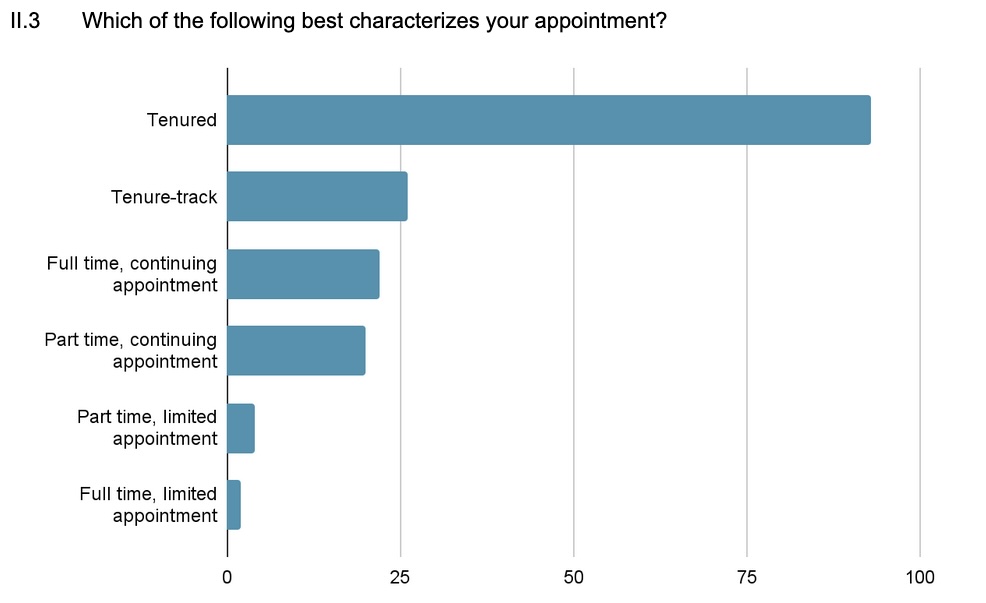
The survey inquired about three main areas: the course(s), faculty members, and institutions. While there were checkbox options for typical courses and faculty specialties, there were also open response fields that allowed faculty members to report any courses or areas of expertise they felt did not fit into one of the listed categories.[1]While developing the survey, we neglected to include music education as a faculty specialty, an omission noted by a couple of respondents. We developed the survey from the courses typically taught for general students; as music education courses tend to be for future music educators, we did not include those courses, and thereby neglected to include music education in the faculty specialty options. Apologies for the oversight. The options for institutional size were modeled on categories from the Carnegie Classifications of Institutions of Higher Education.[2]https://carnegieclassifications.acenet.edu/carnegie-classification/classification-methodology/size-setting-classification/ Most respondents, 85%, reported that they had taught a course for general students within the past five years, indicating how prevalent these courses were in faculty workloads (Figure 1). Approximately 70% of faculty who completed the survey were in tenured or tenure-track positions (Figure 2).
Figure 1: Percentage of responding faculty who have taught a music course for general students
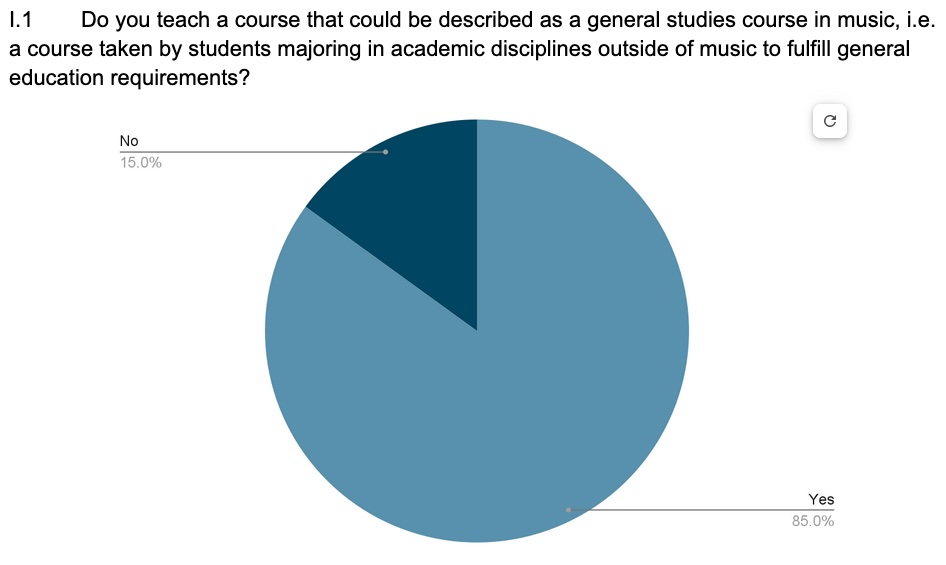
Figure 2: Respondent appointment types
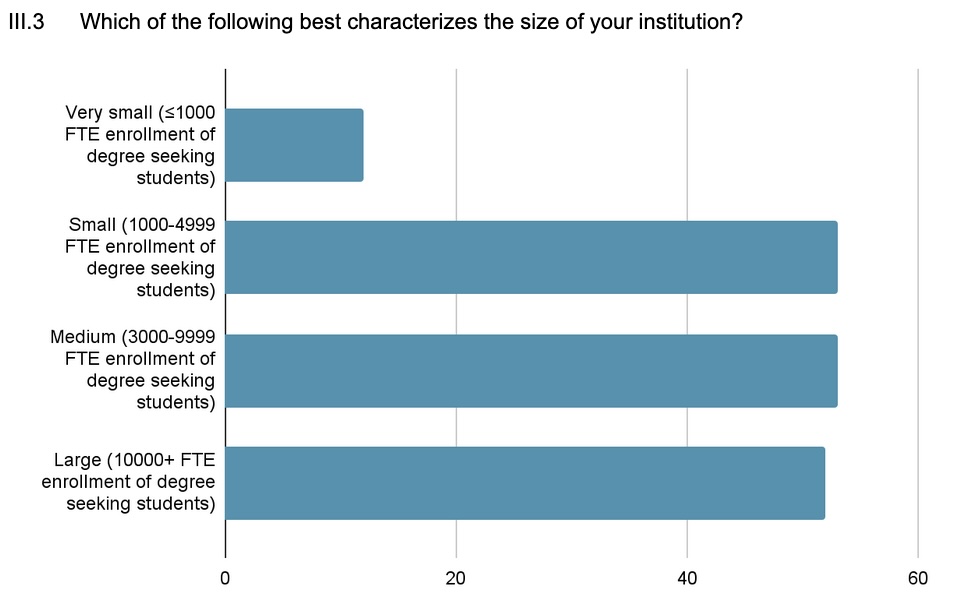
In addition to faculty demographics (e.g., expertise and types of positions), we gathered other relevant demographic information about the institutions where faculty taught. Most responding faculty taught at 4-year institutions versus 2-year institutions: 90.5% and 9.5% of respondents, respectively (Figure 3). Most institutions awarded bachelor's and/or doctoral degrees in music, while a smaller group also awarded master's degrees (Figure 4). Even smaller groups awarded no music degrees or associate degrees in music. The most evenly-distributed demographic category was institutional size (Figure 5). Survey respondents represented small, medium, and large institutions almost equally. Very small institutions, on the other hand, constituted a much smaller proportion, only about a quarter of the number of respondents in other institutional size categories.
Figure 3: 2-year and 4-year respondent institutions
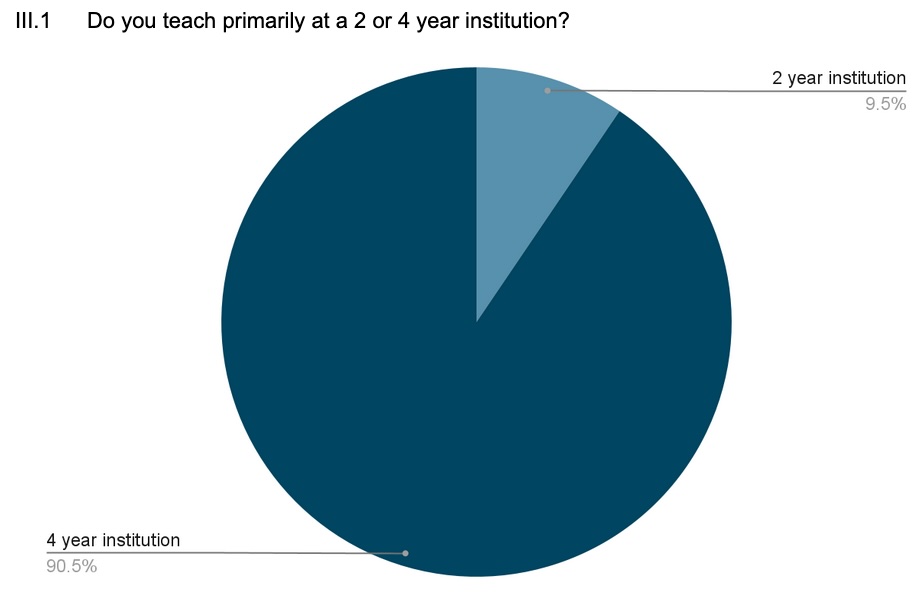
Figure 4: Music degrees awarded at respondent institutions
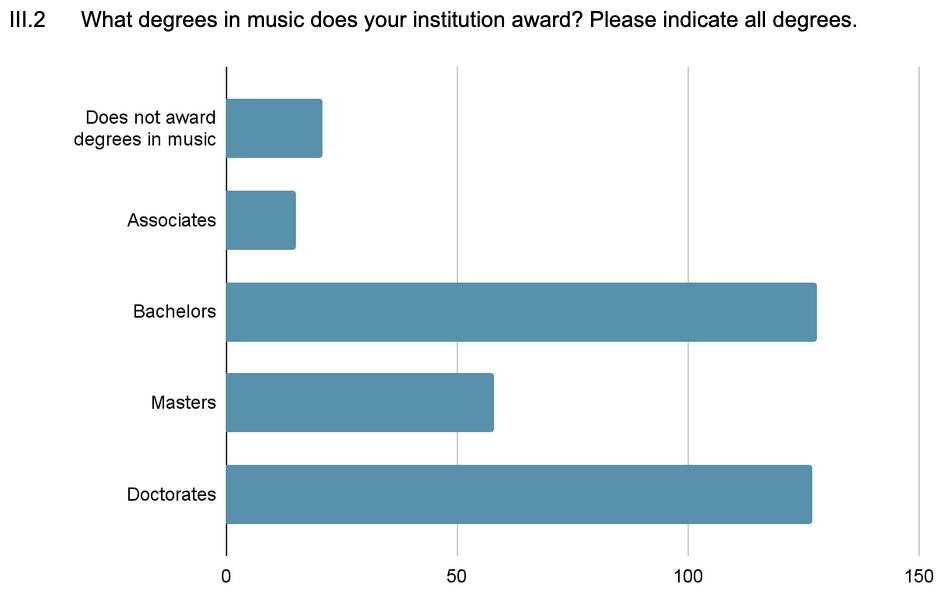
Figure 5: Respondent institutional size
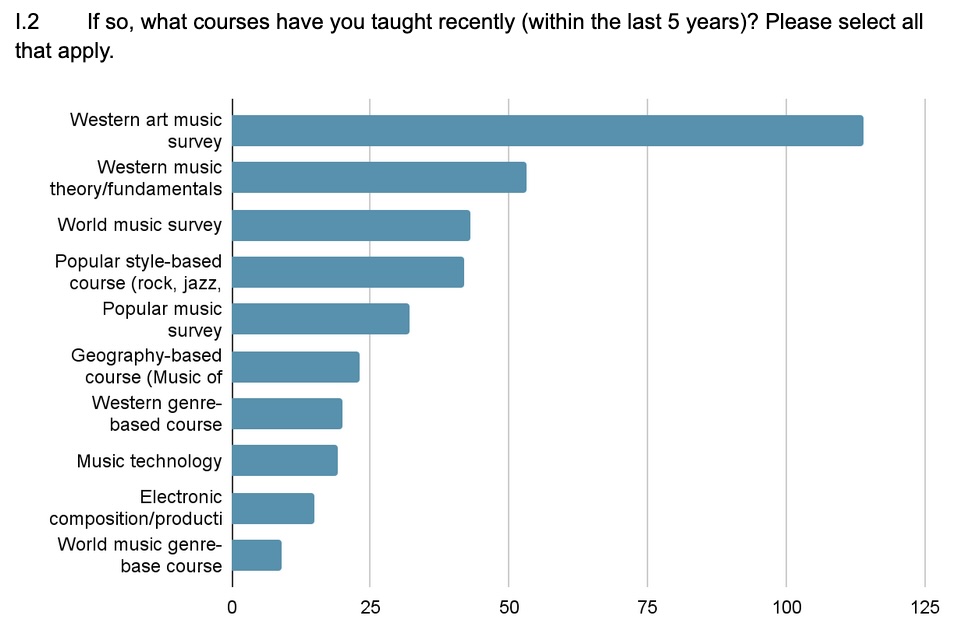
Among the courses that faculty reported offering to general students within the last five years (Figure 6), the traditional Western art music survey was the most common. Twice as many respondents taught this type of course (114) than the next most offered course, Western music theory/fundamentals (53). Some faculty noted in text responses for their “other” courses that they had adapted a Western art survey to include more diverse examples, so this type of course is possibly more prevalent than these numbers suggest.
Figure 6: Music courses for general students reported by respondents
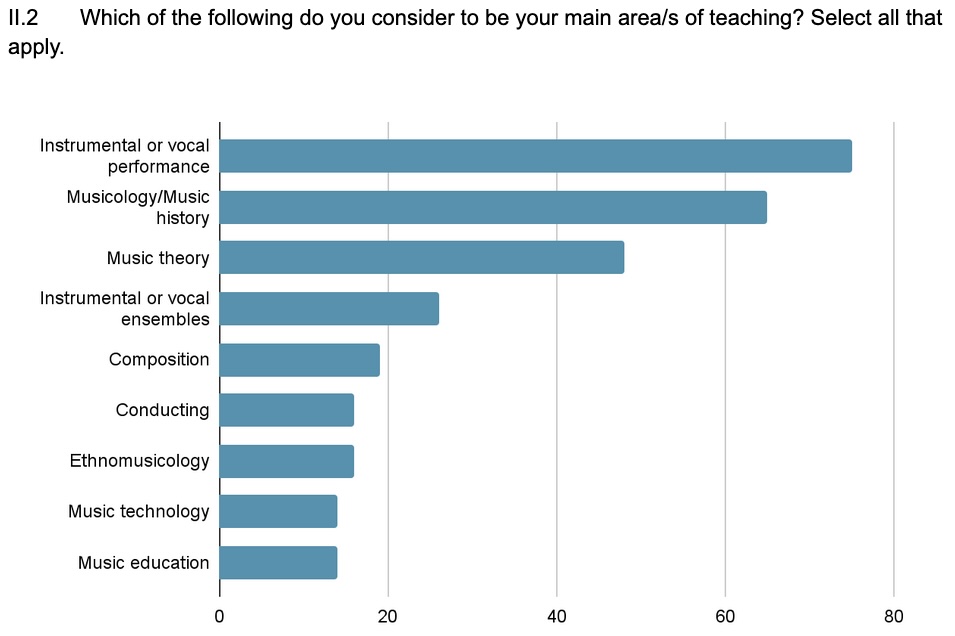
An important issue the Council hoped to investigate was whether faculty were teaching within or outside of their stated specializations. To address this, we asked faculty to identify the field(s) in which they held advanced degrees and/or identify areas where they were most professionally active (Figure 7). Additionally, we asked faculty to identify their primary area(s) of teaching (Figure 8). For both questions, respondents were allowed to select as many options as they believed appropriate.
Figure 7: Fields of expertise or professional activity reported by respondents
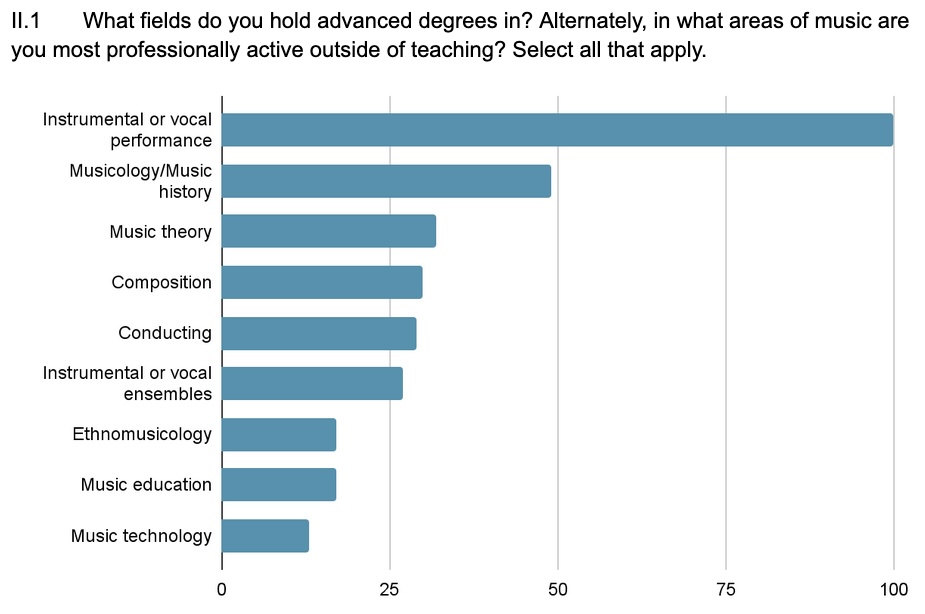
Figure 8: Primary areas of teaching reported by respondents
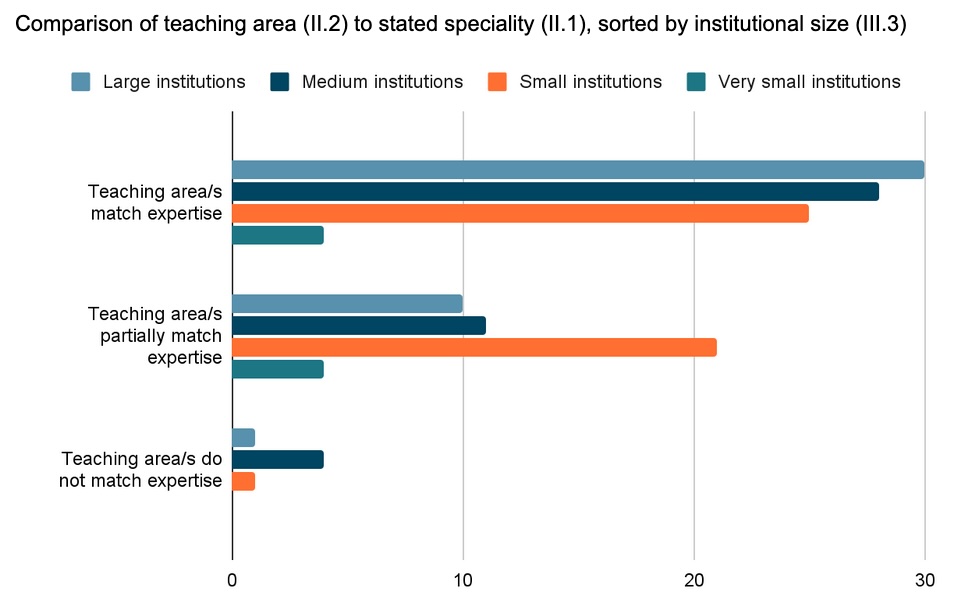
These areas of training/professional activity were compared to the courses these faculty taught (as listed in Figure 6). These areas were compared individually within each response, and each set of responses for teaching area and professional expertise was categorized as either matching, partially matching, or not matching. This was the most interpretive part of the data analysis and required some assumptions. For example, traditional music appreciation courses were coded as musicology, world music courses were coded as ethnomusicology, conducting courses were coded as performance, etc. The comparisons were categorized as either matching, where listed courses aligned with stated fields of expertise; partially matching, where some courses aligned while others did not; or not matching, where listed courses did not align with stated faculty expertise. The same comparison was made between the stated faculty expertise and primary teaching area(s) (as listed in Figure 8). The results of both comparisons were then sorted according to the size of the institution (Figure 9).
Figure 9: Comparison per individual of music courses for general students and reported field(s) of expertise or professional activity, sorted by institutional size

When comparing music courses for general students to faculty areas of expertise, discrepancies existed across all sizes of institutions. The discrepancy, however, was greater in smaller institutions. In large institutions, the number of faculty who taught general music courses outside of their expertise was roughly equivalent to the number who taught courses that fell within their expertise (17 and 16, respectively). The numbers were more disparate for medium and small institutions. At medium-sized institutions, teaching within versus outside expertise was 15 versus 22, and those numbers were 16 versus 26 at small institutions. This discrepancy may indicate that faculty at medium and small institutions are teaching fewer sections, and therefore are more likely to teach more varied courses. The inconsistency between courses for general students and faculty expertise was not generally found between faculty overall teaching area(s) and their expertise (Figure 10). In this response, faculty took courses for music students into account as well, so the increased alignment makes sense. However, in small institutions it was more common for faculty to teach courses outside of their expertise in addition to ones within their expertise.
Figure 10: Comparison per individual of reported teaching area(s) and reported field(s) of expertise or professional activity, sorted by institutional size
These survey results provide an indication that many faculty members, especially at small and medium-sized institutions, find themselves teaching music courses outside of their area(s) of expertise, especially for general students. These students are the audience members and arts supporters of the future; these are also the students who may need the most convincing about the importance of music. Given this vital purpose, there is a need for constructive discourse, structures, and enhanced materials to support music faculty teaching these courses, especially for those teaching outside of their areas of expertise.
[1]While developing the survey, we neglected to include music education as a faculty specialty, an omission noted by a couple of respondents. We developed the survey from the courses typically taught for general students; as music education courses tend to be for future music educators, we did not include those courses, and thereby neglected to include music education in the faculty specialty options. Apologies for the oversight.
[2]https://carnegieclassifications.acenet.edu/carnegie-classification/classification-methodology/size-setting-classification/


 Copyright © The College Music Society. All Rights Reserved.